Taxi Driver at 50: How Scorsese Built Loneliness Frame by Frame
Fifty years after its release, Taxi Driver still teaches the same lesson: point of view is not a camera position but a whole grammar of glances, mirrors, slow motion, colour and sound. A close look at how the film puts us inside Travis Bickle's head.
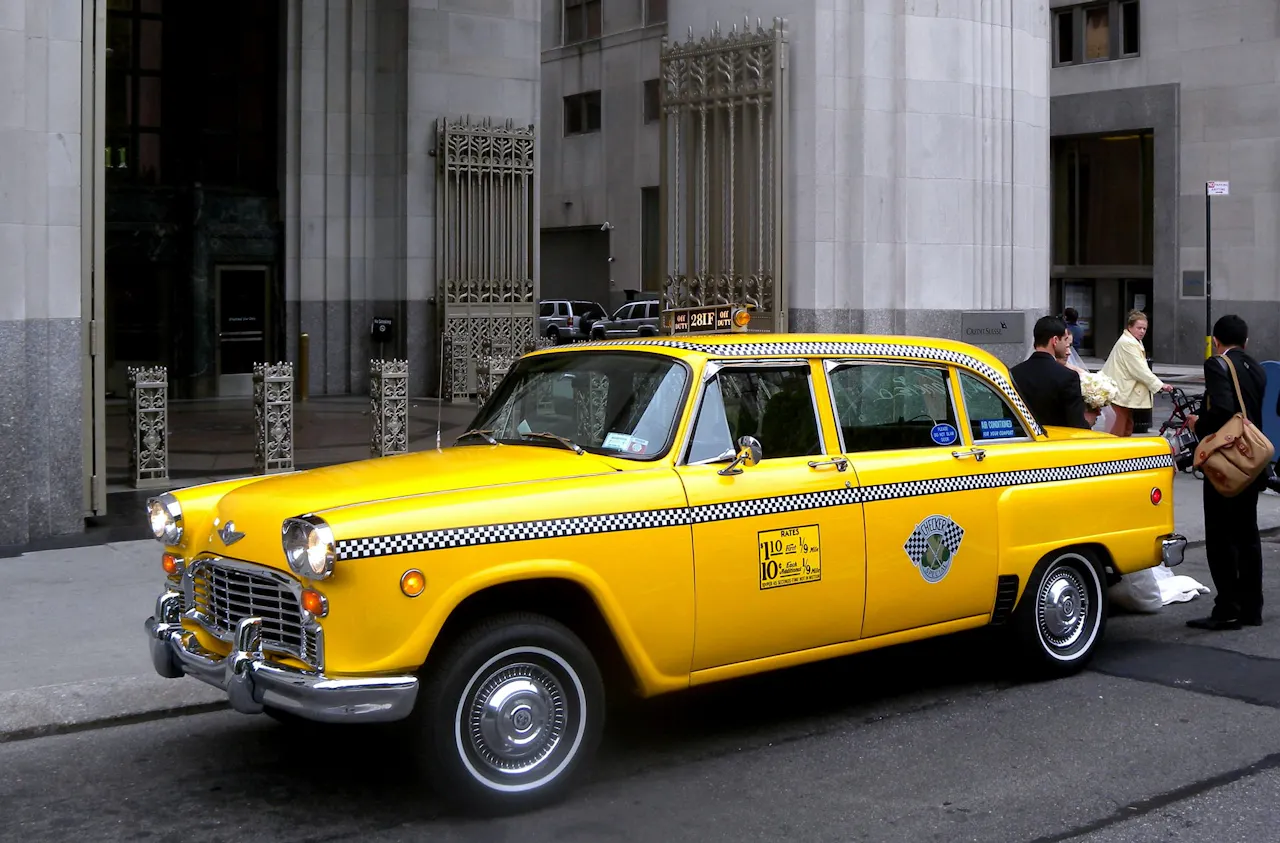
Taxi Driver opened in New York on 8 February 1976. It cost about $1.9 million, won the Palme d'Or at Cannes that May (to a chorus of boos over its violence), and has never stopped being argued about. Half a century on, the arguments are still mostly about the ending. The craft is worth arguing about too, because the film is one of the clearest demonstrations in American cinema of how a director puts an audience inside a character's head without a single line of voiceover doing the work alone.
This is a look at how that is done: the point-of-view grammar, the slow motion, the colour, the score, and the two or three shots that everyone remembers.
A city that was already a set
Martin Scorsese shot the film in the summer of 1975, during a heat wave and a sanitation strike, in a New York that was weeks from bankruptcy. The production did not have to build decay; it photographed it. Condemned buildings served as locations, and the steam rising from manholes in the opening shot is the city's own.
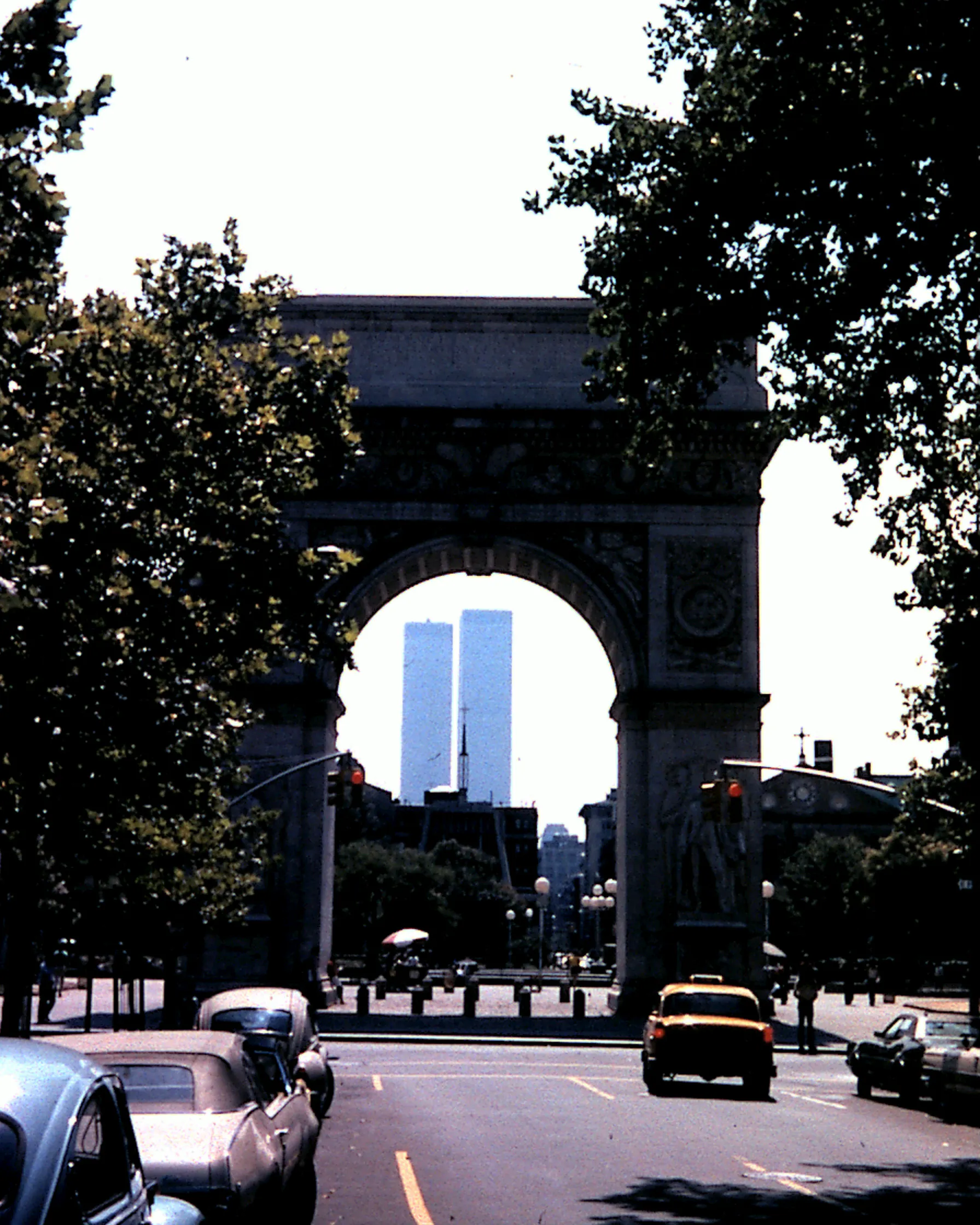
That matters for the analysis because the film's visual strategy is to treat this documentary reality as if it were subjective. The streets are real. The way we see them, through a windshield smeared with rain, in the amber and green of sodium lamps and neon, filtered through the exhausted eyes of a night-shift driver, is entirely constructed.
The windshield as a frame within the frame
Paul Schrader's screenplay, written in a matter of days after a hospital stay, gives Travis Bickle a diary. Scorsese and cinematographer Michael Chapman give him a windshield. A huge share of the film's exterior footage is shot from inside the cab: the world slides past behind glass, wipers cut across it, and reflections of neon lie on top of the people on the sidewalk. Travis is in the city and sealed off from it at the same time, which is the film's whole subject stated as a camera position.
Chapman has described how the cab interiors were shot with available light, the sound crew hidden in the trunk and the director and cinematographer crouched on the rear floor, an approach he credited to Godard and his cinematographer Raoul Coutard. The result is a look that was cheap out of necessity and has become a permanent part of the vocabulary: the driver lit by whatever the street throws in, the passenger a shape in the back.
The mirror and the glance
If the windshield is the outward frame, the rear-view mirror is the inward one. Scorsese returns to it constantly: a strip of Travis's eyes, cut off from the rest of his face, watching. The mirror shot does three jobs at once. It isolates the eyes, which are the only part of Travis that ever seems fully alive. It puts us in the position of the passenger being watched. And it establishes that Travis's relationship to everything, passengers, the city, Betsy, Iris, is to observe from a small enclosed space.
Then there is the actual mirror scene. Robert De Niro's "You talkin' to me?" was improvised; Schrader has said De Niro borrowed the riff from an underground New York comedian he had seen, and Scorsese has pointed to a mirror scene in John Huston's Reflections in a Golden Eye as a model. Whatever the source, notice what the scene does formally. Travis addresses an imagined enemy in the mirror, and the film frames the mirror image and the "real" Travis so that we can rarely be sure which we are watching. A man rehearsing violence in front of a reflection is a man talking to himself, and the staging makes us his only other audience.
Slow motion as attention, not spectacle
Slow motion in 1970s American cinema usually meant violence, and Peckinpah. Scorsese uses it for looking. The first time we see Betsy (Cybill Shepherd), she crosses the street in slow motion while Travis's narration calls her an angel; later, in the diner, a fizzing glass of water is watched in a slowed-down close-up while the conversation around Travis goes on. The technique tells us that Travis's attention is not like ours. It fastens on a detail and holds it past the point of comfort. When the film finally does use slow motion for violence, in the tenement climax, the effect has been prepared: this is what Travis's gaze has been leading to.
Bernard Herrmann's two voices
The score was Bernard Herrmann's last. He finished recording it on 23 December 1975 and died the next day; the film is dedicated to him. Structurally, it has two voices. There is the saxophone theme, a warm, almost romantic melody that would fit a very different film about New York at night. And there is the low, dissonant, military material, snare and brass, that attaches to Travis's growing sense of mission.
The two are not simply "love theme" and "danger theme." Herrmann lets them bleed into each other, and by the end the saxophone is playing over images that no longer deserve its tenderness. The music has become another unreliable narrator. Listening to the score against your shot map, you will find that the point where the two voices stop being distinguishable is roughly the point where Travis stops distinguishing between rescuing and killing.
The overhead shot
After the shootout, the camera rises to the ceiling and tracks slowly back through the tenement, looking straight down at the bodies, the blood, the hallway, the stairs, and finally out to the street where the police cars have gathered. The shot was filmed in a real building; the crew needed about three months of preparation and cut through the ceiling to make it possible.
Formally it is the one moment in the film where we leave Travis's point of view. Until now we have seen the city through his windshield and his mirror. Now we look down at him from a position no character occupies. The usual readings call it God's eye, or the police report, or the newspaper photograph that will run the next morning. Whatever you call it, the withdrawal of subjectivity is the point. The film has spent ninety minutes inside a head and now steps out to show us what that head has done.
The colour that was taken away
The climax looks the way it does partly because of the ratings board. The MPAA weighed an X rating for the shootout, and to secure an R, Scorsese desaturated the sequence so the blood read as brown rather than red. He later said he preferred the result; Chapman regretted it, and has noted that no fully saturated print survives because the original elements deteriorated.
It is worth pausing on this as a lesson in analysis. The muted palette of the climax is now routinely praised as an artistic choice that drains the violence of glamour. It was a compromise with a censor. Both things are true, and a good reading holds them together rather than choosing the flattering one.
The ending, still open
Travis survives, is celebrated in the press as a hero, drives Betsy home, refuses her fare, and glances at something in his mirror as the score sours for a final second. Roger Ebert asked the obvious question: is this a fantasy, a dying man's last thoughts? He concluded that the sequence works emotionally whether or not it is literally true. Scorsese has acknowledged the dream reading but said the last look in the mirror means Travis is "a ticking time bomb." Schrader has been blunter: Travis is not cured, will not be a hero next time, and the last frame could be spliced to the first and the film started over.
Notice that all three readings depend on formal evidence, not plot. The dream reading rests on the sudden shift in tone and the impossibility of the press coverage. The time-bomb reading rests on a single glance and a single musical sting. The film has trained us for ninety minutes to read Travis through his eyes in a mirror, and then it ends on exactly that image and refuses to tell us what he saw. That refusal is the design.
What to take from it
- Point of view is a system. Windshield, mirror, slow motion, narration and score all agree with each other. Break one and the others still hold the audience inside the character.
- Constraint is not the opposite of style. Available light in the cab and a censor's demand on the climax both became things the film is admired for.
- Leave one shot outside the system. The overhead track is powerful because it is the only time the film steps out of Travis's head.
- An ambiguous ending needs a consistent grammar. The last glance in the mirror only works because the mirror has meant something all along.
Fifty years is long enough for a film to become an institution and stop being watched. Taxi Driver resists that. Put the sound off, watch the mirror shots in order, and the film is as strange and precise as it was in 1976.