Night of the Living Dead: What a $114,000 Horror Film Still Teaches About Craft
George A. Romero's 1968 debut was shot on weekends near Pittsburgh with chocolate syrup for blood and a farmhouse slated for demolition. A Halloween look at how its limitations became its style, why the casting of Duane Jones changed the film, and how a missing copyright notice made it everyone's.
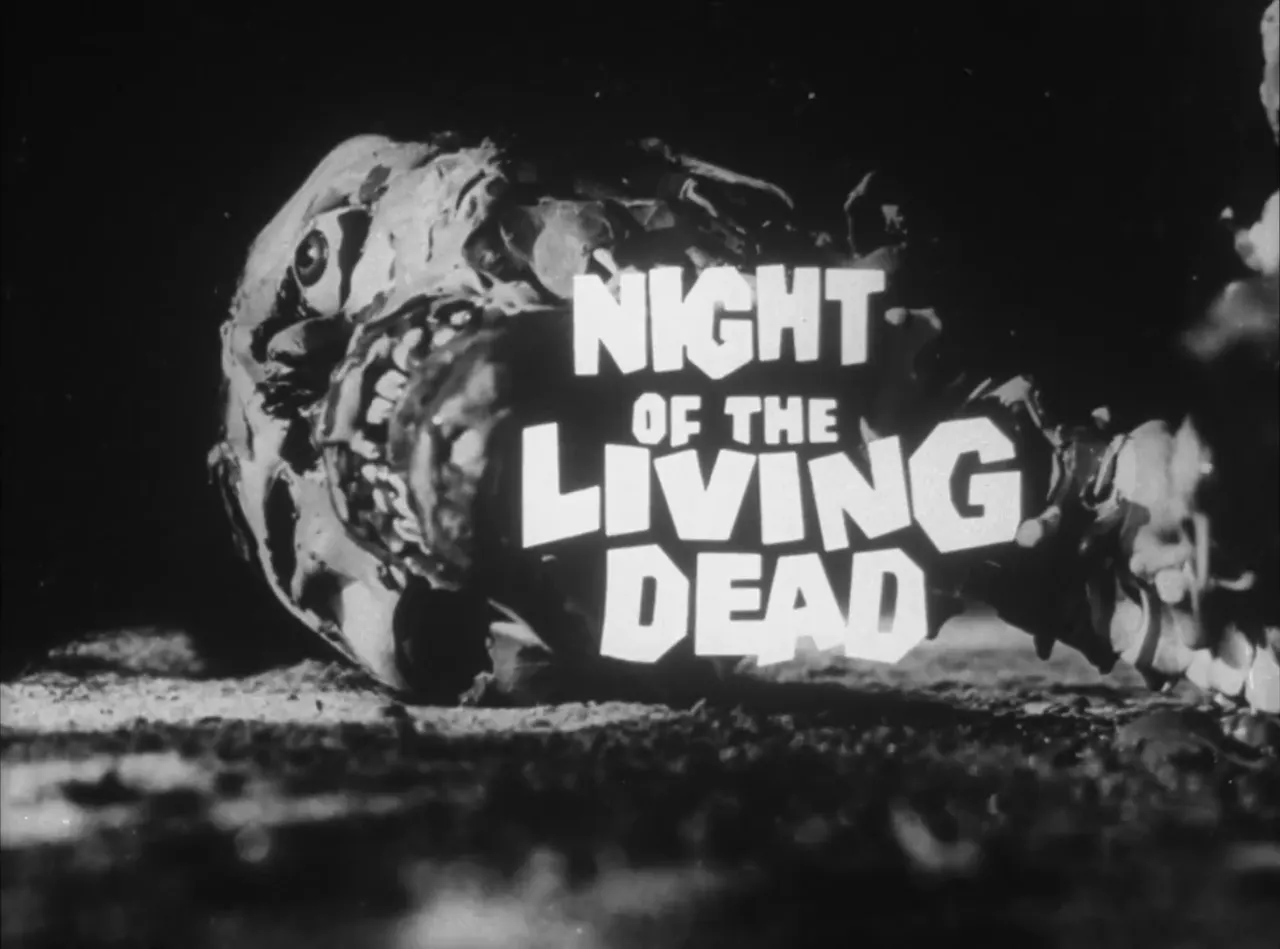
Night of the Living Dead premiered at the Fulton Theater in Pittsburgh on 1 October 1968. It had been made by a group of local commercial filmmakers who formed a company, Image Ten, for the purpose, each putting in $600 to raise a first $6,000; the final budget was somewhere around $114,000. It went on to gross more than 250 times that, redefine what the word "zombie" means, and end up in the Library of Congress's National Film Registry in 1999.
It is also, because of a paperwork accident, one of the few landmark American films anyone can legally copy, screen and cut up. That makes it the ideal Halloween study text: you can watch it for free, frame by frame, and see exactly how a film with no money built a style out of what it lacked.
Constraint one: black and white
By 1968 colour was standard for American features, and the choice of 35mm black-and-white stock was made for cost. It turned out to be the most important decision in the film. Black and white put Night of the Living Dead in the visual register of television news and documentary rather than of Hollywood horror, at the exact moment when American television news was full of Vietnam and assassinations. The film's flat, grey, available-light look reads not as "old movie" but as "footage."
George A. Romero, who directed, photographed and edited, leaned into that. The radio and television reports that punctuate the film, the deadpan interviews with officials and the posse footage at the end all borrow the grammar of the evening news. Nothing in the frame says "this is a monster movie." Everything says "this happened."
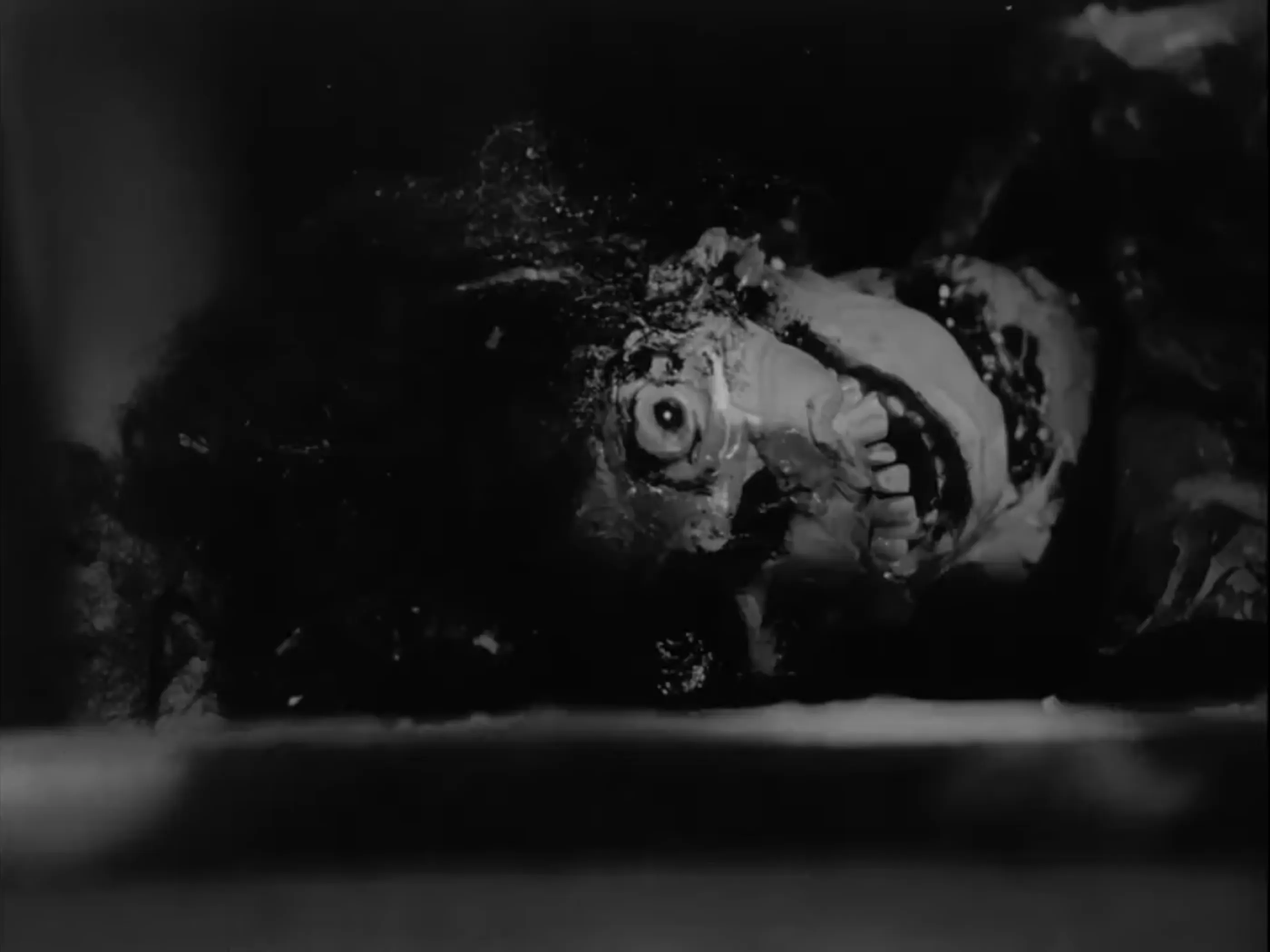
Black and white also solved the gore problem. The blood was Bosco chocolate syrup; the flesh the ghouls eat was meat and offal donated by a local butcher. In colour, both would have looked like exactly what they were. In monochrome they read as horror, and the film could show more than its contemporaries without the effects giving it away.
Constraint two: one location
Most of the film takes place in and around a farmhouse near Evans City, Pennsylvania, that was scheduled for demolition, which meant the crew could board up windows, break down doors and stain the floors without anyone objecting. Cellar scenes were shot separately, under the offices of The Latent Image, one of the two companies that formed Image Ten.
A single-location siege is a gift to a director who can block. Romero's use of the house is a small master class in geography: we learn the front door, the back door, the windows, the stairs and the cellar door in the first act, and every later scare depends on knowing where the danger is relative to the characters. The film's central argument is even architectural. Ben (Duane Jones) wants to hold the ground floor, with its exits; Harry Cooper (Karl Hardman) wants to retreat to the cellar, with its single door. The house turns a personality conflict into a floor plan.
Constraint three: no stars, no schedule
The cast were local actors, friends and investors; Hardman and Marilyn Eastman, who play the Coopers, were partners in one of the founding companies. Shooting ran from July 1967 into January 1968, largely at weekends, around everyone's day jobs.
The one casting decision that mattered was Ben. The role was not written for a Black actor; Romero has said Duane Jones simply gave the best audition, and he made a choice that turned out to be radical: he left the script as written. Nobody in the film mentions Ben's race. He is the most competent person in the house, gives orders to a white family, strikes a white man who panics, and is right about almost everything. And then, in the final scene, having survived the night, he is shot through a window by a posse who take him for one of the dead, and his body is dragged out with meat hooks and burned in a pile of ghouls.
Romero has said the ending was written before Jones was cast. That is precisely the point for an analyst. The images, a Black man shot by armed white men in 1968 and thrown on a fire, carried meanings the script did not plan, and the film did not soften them. Whether you call that luck or instinct, it is the reason the film is taught in history departments as well as film schools.
The opening as a lesson in escalation
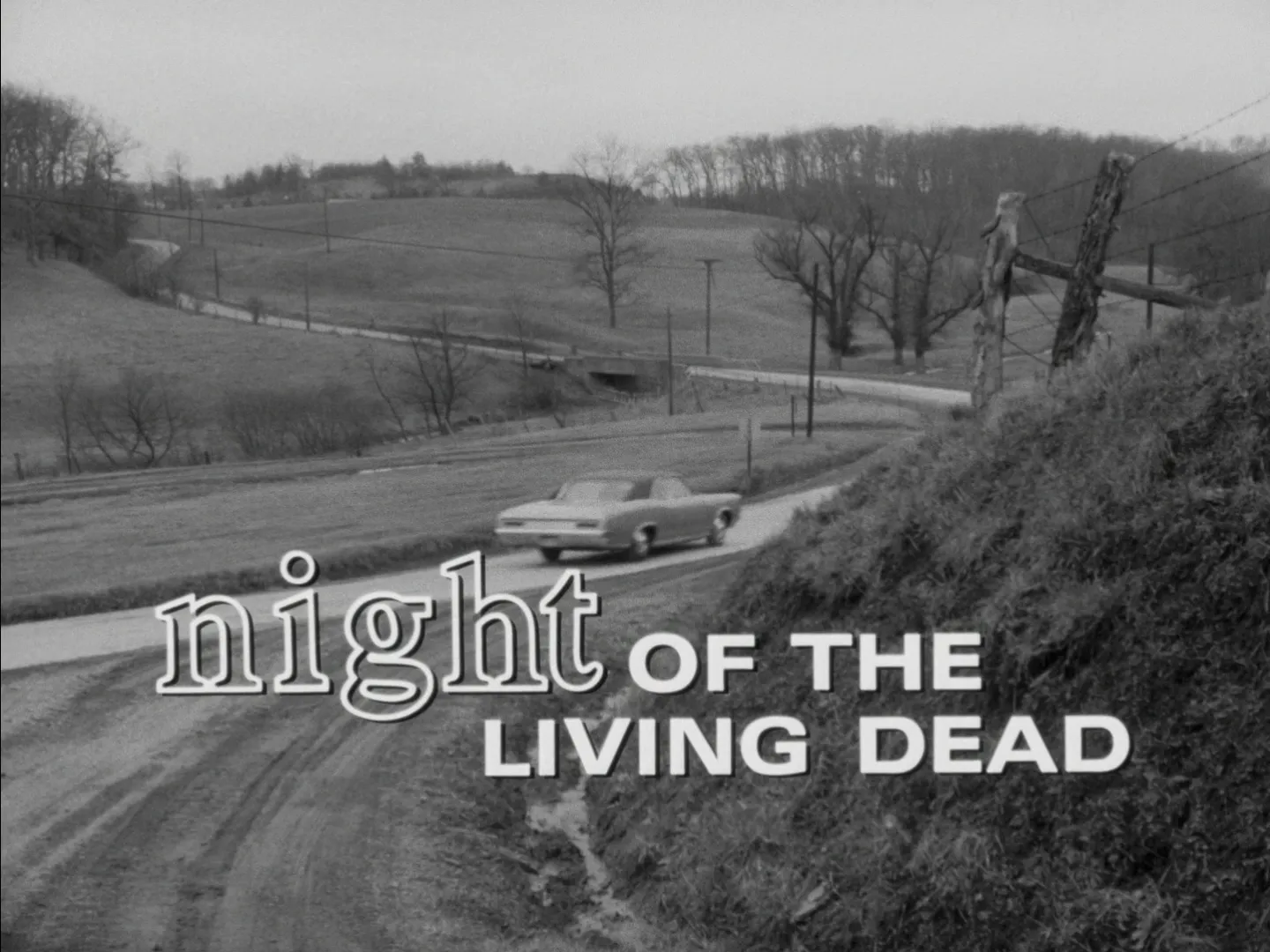
The first ten minutes are worth a shot map. A car on a country road; a cemetery; a brother and sister visiting a grave; a joke ("They're coming to get you, Barbra"); a distant figure walking between the headstones. The figure is simply a man in a suit. He does not lurch, he does not moan, and the film gives him no music cue. He is uncanny because he is ordinary, and because he is closer in each shot than the cutting has prepared us for.
Then the attack, the brother's death, a chase to the car, a chase to the farmhouse. Notice how the cutting speeds up and how the camera goes hand-held and tilted only after the first act of violence. The film has spent its calm carefully, so that when it spends it, the change registers. Most horror films now open with a jolt; Night of the Living Dead opens with a joke and a man walking slowly, and it is more frightening.
Sound on no budget
The score is library music, licensed cues rather than an original composition, and the film uses it sparingly. Long stretches are carried by the sound of boards being nailed, the radio, and the moaning outside. This is another case of a limitation becoming a method: without money for a composer, the film had to make the world itself frightening, and the world (a radio announcer's voice, a door being tested) is more frightening than a string section.
The accident that made it everyone's
The film's working titles included Night of the Flesh Eaters. When the distributor, the Walter Reade Organization, changed the title to avoid a conflict with another film, the copyright notice that had been on the title card was left off the new one. Under the law in force in 1968 a published work without a notice fell into the public domain, and so Night of the Living Dead became free for anyone to duplicate. Hundreds of home-video editions followed, of every quality; so did remakes, sequels, colourised versions and a permanent legal grievance for the filmmakers.
The unintended consequence for students is that the film is the most accessible landmark in horror. The Museum of Modern Art and The Film Foundation completed a 4K restoration from the original camera negatives in 2016, so it can now be seen as it was shot rather than in the muddy dupes that circulated for decades. If you want to practice scene analysis on a film you can freely pause, scrub and screen in a classroom, there is no better candidate.
What it changed
Before 1968 a zombie in the movies was a Haitian folkloric figure, a person under a sorcerer's control. Romero never used the word; his script says "ghouls." But the rules his film established, the recently dead rising, eating the living, spreading by bite, destroyed only by damage to the head, became the definition, and every zombie fiction since has either followed them or announced that it was breaking them. The film also opened the door to graphic gore in mainstream horror and, in its unrelieved ending, to a kind of pessimism that the genre had mostly avoided. Variety called it an "unrelieved orgy of sadism." Later critics, Pauline Kael among them, called it one of the most terrifying films ever made. Both were describing the same qualities.
Five things to steal
- Choose the format that matches the fear. Black and white put the film in the register of news. Ask what your story looks like when it is "real" and shoot toward that.
- Teach the geography early. Doors, windows, stairs. Every later scare in a single location depends on the audience knowing the map.
- Let the argument be spatial. Ground floor versus cellar is a character conflict you can photograph.
- Spend calm before you spend chaos. The slow man in the cemetery is scarier than any jump cut because the film has withheld everything up to that point.
- Do not soften what the images say. The ending meant more than the script intended. The film had the nerve to leave it alone.
Fifty-eight years on, the ghouls are slower than we are used to, the acting is uneven and the effects are chocolate syrup. It is still the film most horror directors would give a great deal to have made.