Reading Light: Three-Point Lighting and What Citizen Kane Did With It
Key, fill and back light are the first lesson in every film course and the last thing most viewers ever notice. A tutorial on reading light on screen, from the textbook setup to Gregg Toland's deep-focus, low-ceilinged, half-dark world in Citizen Kane.
Ask a room of film students what a scene looked like and they will tell you about the camera. Ask what it was lit like and the room goes quiet. Light is the layer of cinematography that audiences feel most and see least, which is exactly why it is worth learning to read. This tutorial starts with the textbook setup, gives you a set of questions to ask of any shot, and then spends some time on the film that broke the textbook most usefully.
The textbook: three points
Three-point lighting is the default because it solves the three problems any lit face presents.
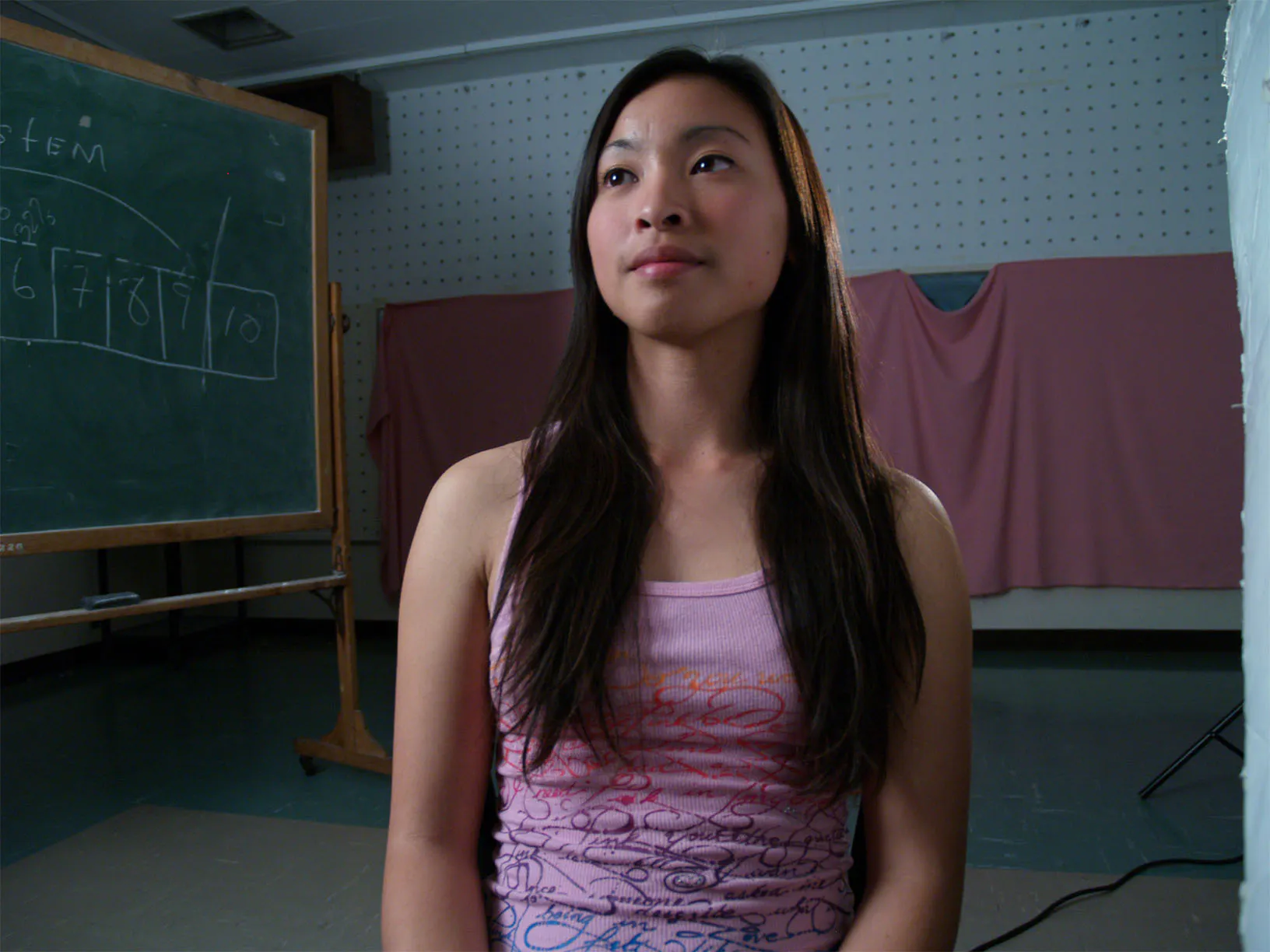
- The key is the main source. It gives the face its shape, because shape is made by shadow, and the key decides where the shadows fall. Move it toward the camera and the face flattens; move it to the side and the nose and cheekbones carve the face into a lit half and a dark half. Raise it and the eye sockets deepen; lower it and the face turns strange.
- The fill comes from the other side, softer and weaker, and decides how dark the shadows the key made are allowed to get. No fill: half the face disappears. Fill equal to the key: no shadows, no shape.
- The back light (or hair light, or kicker) hits the subject from behind and above, putting a rim of light on the shoulders and hair so the figure separates from the background. Take it away and people sink into the wall behind them.
The single most useful number in lighting is the key-to-fill ratio. A ratio of 2:1 (fill half as bright as the key) gives gentle, flattering modelling. 4:1 starts to look dramatic. 8:1 and beyond is film noir: a slash of light and a face mostly in the dark. When you are reading a shot, estimating this ratio is the fastest way to describe its mood in a way another filmmaker will understand.
High key, low key, and the words people misuse
High-key lighting means a low ratio and a bright overall exposure: comedies, musicals, commercials, most television. Shadows are minimal, everything is legible, nothing is hidden. Low-key means the opposite: high ratios, large areas of darkness, a frame in which the eye is led by the few things that are lit. The terms describe the ratio, not the direction; a low-key scene can be lit from the front, and a high-key scene can be lit from the side. Keep them separate from hard and soft, which describe the quality of the source: a small, distant light (the sun, a bare bulb, a focused Fresnel) throws hard-edged shadows; a large or diffused source (an overcast sky, a light through a silk) wraps around the subject and blurs the shadow edges.
Motivated light
Classical Hollywood lit for beauty and legibility and did not much care whether the light made sense. From the 1940s on, and overwhelmingly since the 1970s, the dominant convention has been motivated lighting: every source on screen should appear to come from something in the world (a window, a lamp, a fire, a television). The lamp in the frame is rarely doing the work; a much larger unit just out of frame is doing it, aimed and coloured to look as if it were. When you read a shot, ask what each light is pretending to be. Then ask what it would have looked like if the filmmakers had used only the real source, and you will see how much has been added.
Four questions for any shot
- Where is the key, and how hard is it? Find the brightest side of the main face and the sharpness of the nose shadow.
- What is the ratio? Can you see detail in the shadow side, or is it black?
- Is the subject separated from the background, and how? By a back light, by a brighter or darker wall, by colour, by focus?
- What is the light pretending to be? And is the pretence consistent across the cuts, or does the key jump sides when the angle changes?
Do this for a dozen shots from a film you admire and you will have a description of its lighting style that is far more precise than "moody."
Citizen Kane: the textbook broken on purpose
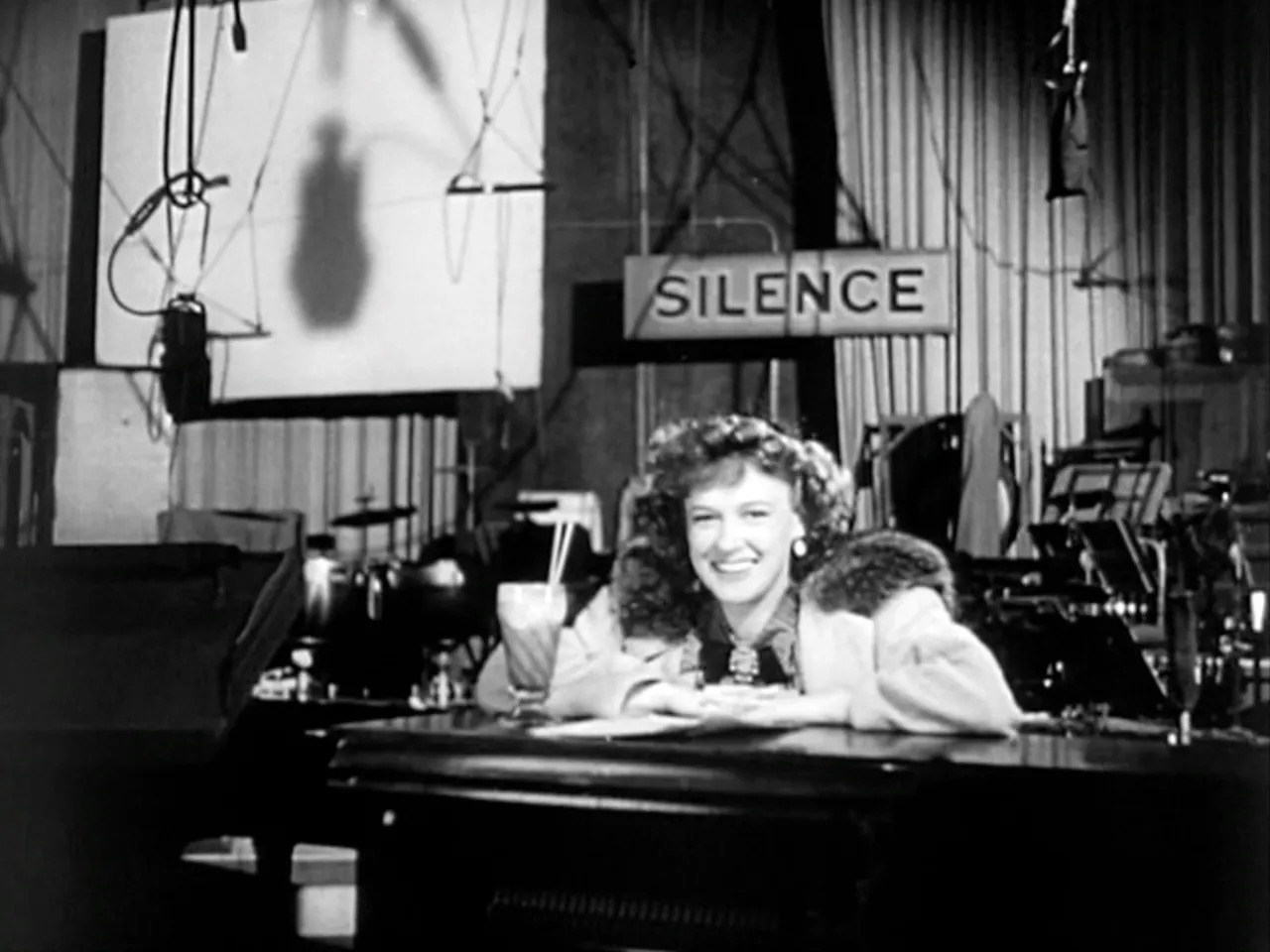
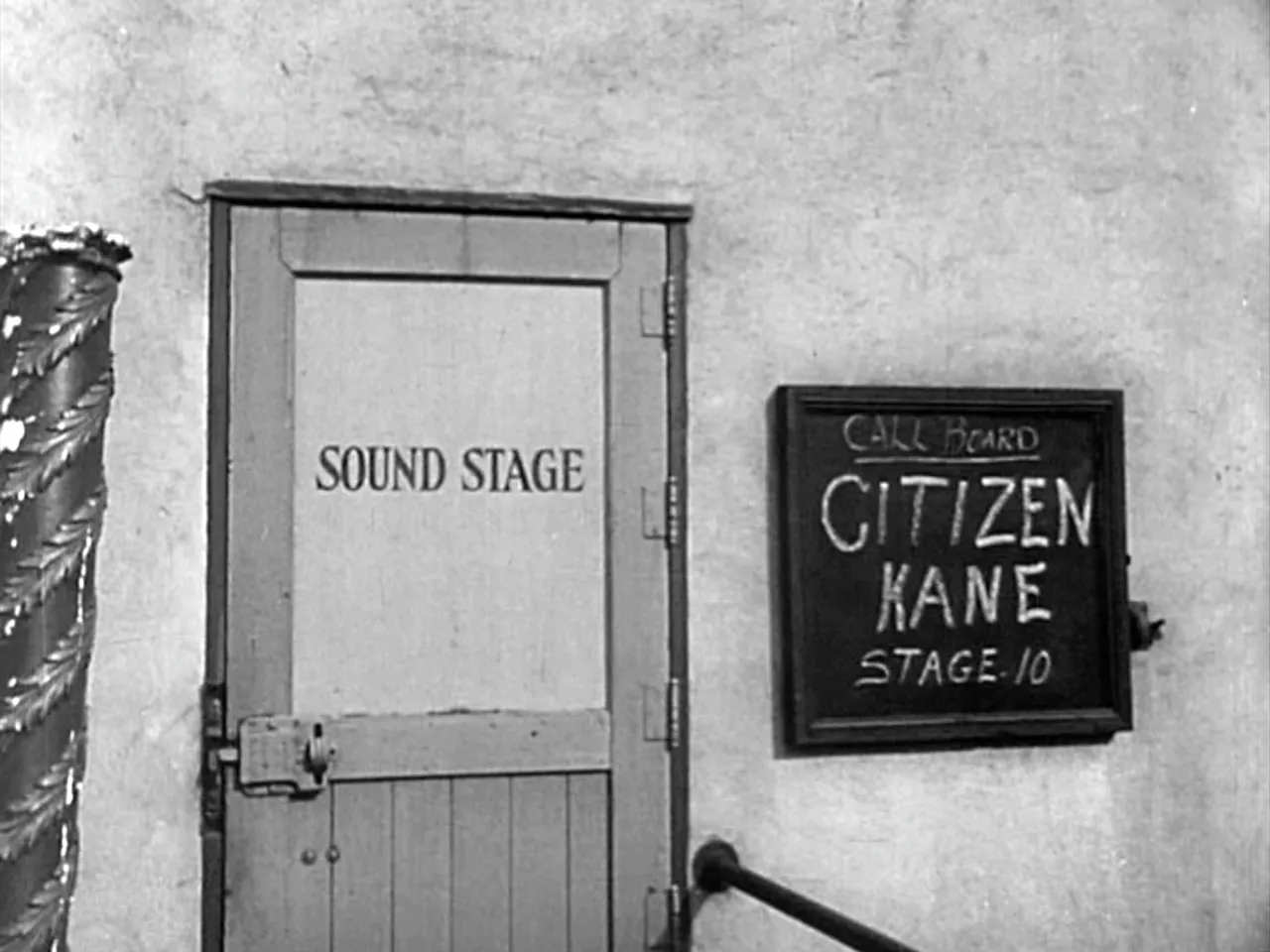
Gregg Toland was already one of the most respected cinematographers in Hollywood when he asked to work with the 25-year-old Orson Welles on Citizen Kane (1941), reportedly because he wanted to work with someone who did not know what could not be done. The film's lighting is famous, and the famous parts are all violations of the rules above.
Faces in the dark. Welles and Toland let key characters deliver important lines with their faces entirely in shadow: the reporter Thompson, who drives the investigation, is barely lit at all in the screening-room scene and is almost never seen clearly. In the textbook, the speaker's face is lit. In Kane, the darkness tells you that this man is a device, not a character, and that the film's real subject is the man being discussed, not the men discussing him.
Ratios that go to black. Much of the film sits at ratios so high that the fill is effectively absent. The great hall of Xanadu is a few pools of light in a cavern; the newspaper office at night is lamps and darkness. This was expensive to do well in 1941 and Toland did it with hard sources and very little diffusion, producing edges as sharp as a woodcut.
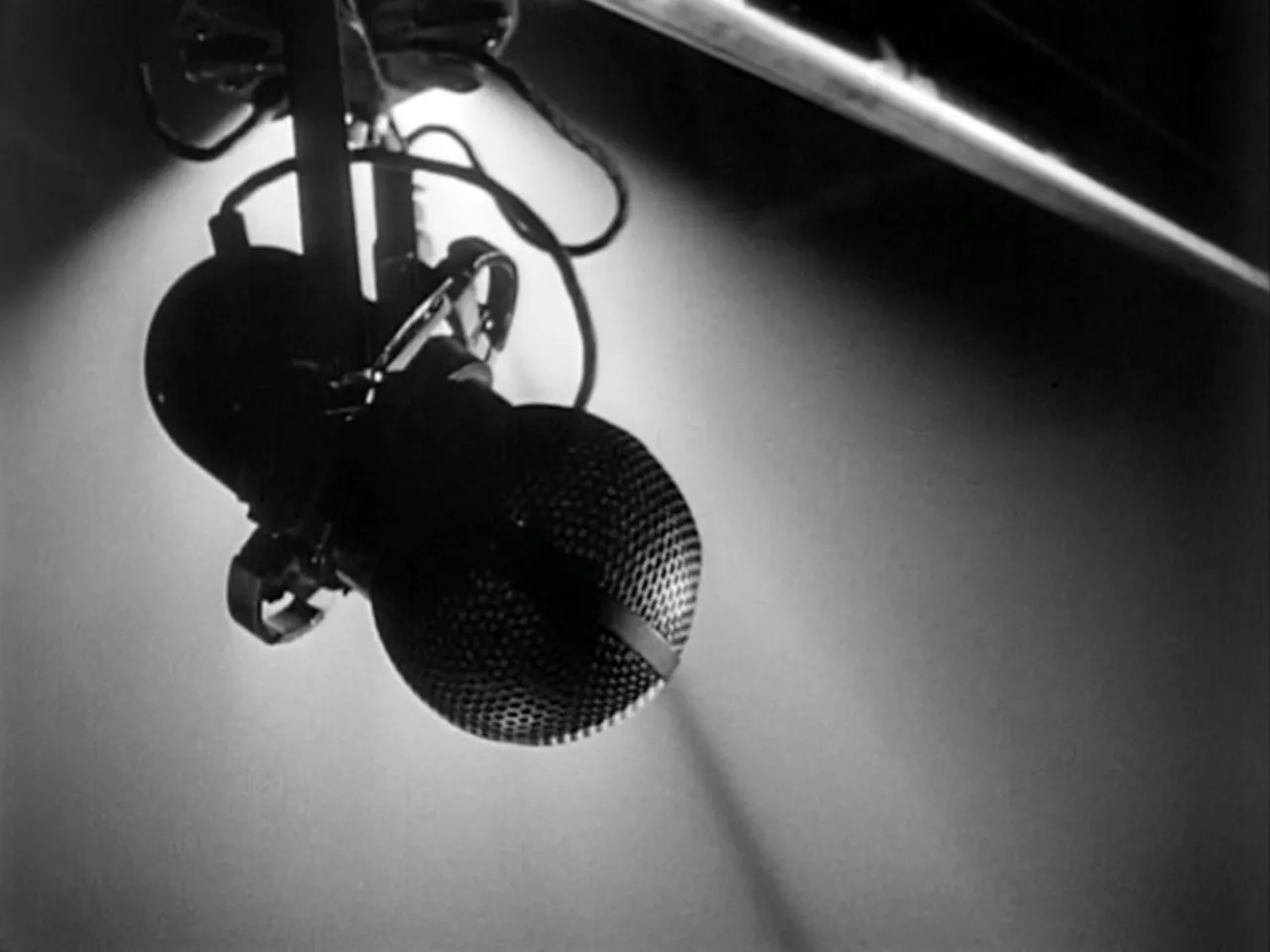
Ceilings. Studio sets of the era had no ceilings, because the lights hung where the ceiling would be. Toland and Welles wanted low angles that would show ceilings, so the art department built them out of muslin, which also let the sound department hide microphones above them. The consequence for the lighting is enormous: with the top of the set closed, light had to come from low or from the sides, through doorways and windows, which is where motivated lighting says it should come from anyway. The low, hemmed-in look of Kane is a direct result of that constraint.
Deep focus. Toland's other famous achievement was keeping foreground and background sharp at the same time, so that a boy playing in the snow through a window and the adults signing his life away in the foreground are both in focus. Deep focus demands small apertures, which demand a great deal of light, which is why the film's high-ratio look was also a technical necessity: to get enough light for the exposure, Toland used hard, powerful units and simply did not fill the shadows they created. Style and physics agreed.
Backlight as silhouette. Several of the film's key images, the figures at the newspaper window, Kane on the stage at his political rally, Kane's final walk between facing mirrors, are lit from behind so that people become shapes. Separation from the background is taken to the point where the subject is only separation, with no detail left. It is the back light of the three-point setup used as the whole setup.
Welles credited Toland on the same title card as himself, an almost unheard-of gesture. Whatever else you think of the film, it is an argument that lighting is authorship.
A short exercise
Take one lamp, one white wall and a willing face. Light the face from the front, then from 45 degrees, then from 90, then from behind. Then move the light up, then down. Photograph each position. You have just made every choice a cinematographer makes, in miniature, and the pictures will teach you more than any list. Then go back to a film you know and read it with the four questions above. The scene you thought was "dark and dramatic" will turn out to be an 8:1 ratio with a hard side key from a motivated window, no fill, and a back light from a practical lamp. Now you can say so, and now you can do it.