Blocking, Eyelines and the 180-Degree Rule: How a Scene Stays Legible
Why do we always know who is looking at whom? A tutorial on the invisible grammar of coverage: the axis of action, eyeline matches, screen direction, and how blocking a scene decides where the camera can go, with examples from His Girl Friday and Buster Keaton.
Two people talk across a table. The film cuts between them a dozen times, from several angles, and you never once wonder where anyone is sitting. That certainty is not natural. It is manufactured by a set of conventions worked out in the 1910s, taught in every film school and broken, when it is broken, on purpose. This tutorial lays out the system, shows how blocking (where the actors are and how they move) sets the constraints, and looks at what happens when a director crosses the line.
The axis of action
Draw an imaginary line through the two people in your scene. Film theorists call it the axis of action; crews call it "the line." The 180-degree rule says: put your camera anywhere in the half-circle on one side of that line, and keep it there. As long as every setup is on the same side, the person on the left stays on the left in every shot, the person on the right stays on the right, and the audience's mental map of the room survives the cutting.
Cross the line and the two people swap sides of the frame. If the film has not prepared us, it reads as a mistake: the characters appear to have jumped seats, or to be looking the same way rather than at each other. The rule is not about realism. A real observer walks around the table freely. It is about the fact that a cut destroys the viewer's sense of continuous space, and the 180-degree convention rebuilds it in the only place a film can, the frame's left-to-right axis.
Eyelines
The second half of the system is the eyeline match. When we cut from a face to what it is looking at, the direction of the look has to agree with the position of the object. If she looks frame-right and slightly down, the cup she is looking at should be found by a camera that, in effect, looks frame-left and slightly up from where the cup would be. Get it wrong and the audience feels, without being able to say why, that she is looking at something else.
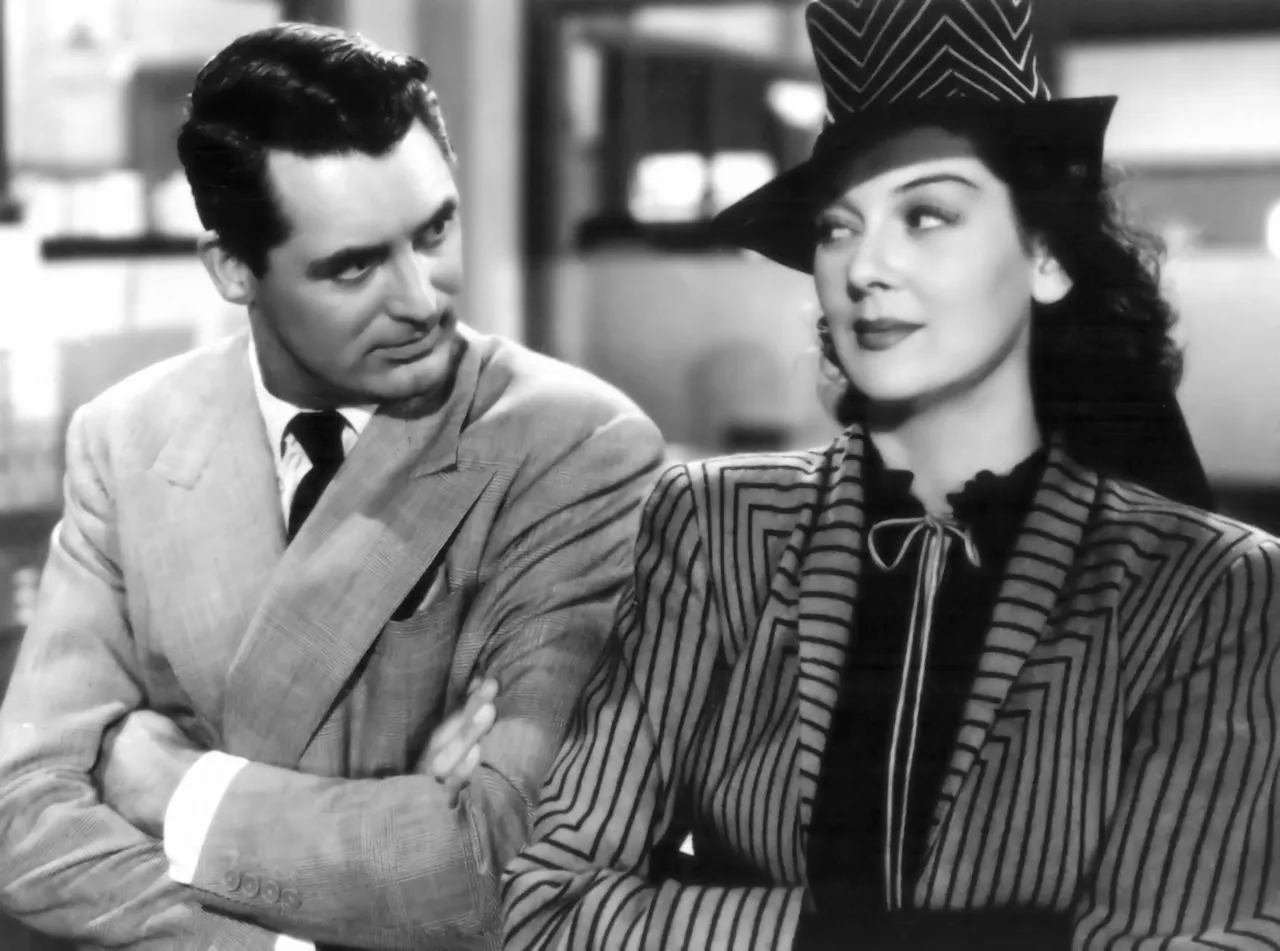
In a two-person dialogue this becomes precise. If she is on the left of frame in the wide shot, then in her close-up she looks right; in his close-up he looks left. The closer the camera is to the line, the more directly the actors look toward the lens (though never into it, unless the film is breaking a different rule). The further round toward 90 degrees, the more profile you get and the less we see of their eyes. Directors choose this angle for emotional temperature: closer to the line is more intimate, further round is cooler and more observational.
Screen direction
The same logic governs movement. A character who exits frame right should enter the next shot from frame left, so that the journey continues in one direction across the cuts. Chases, journeys and battles depend on this. In a war film the two armies are given opposite screen directions in the first shot and hold them until they meet; reverse one army by accident and the audience loses track of which side is winning. In a road movie, "west" is a screen direction, and the film will hold it for two hours.
Blocking comes first
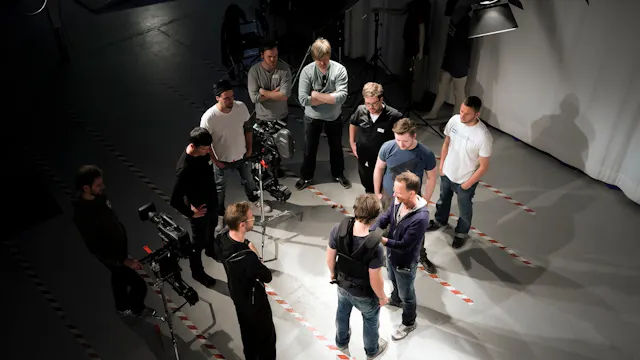
All of this is downstream of blocking. Where the actors stand, sit, cross and turn decides where the line is, and so decides where the camera may go. Experienced directors block a scene before they think about coverage, and they block with the line in mind: a move that takes one actor around behind the other relocates the axis, and that is the legitimate way to get the camera to the other side of the room. If she walks around the table during the scene, the line has moved, and the camera can follow her to the new geography without any jump.
The other legitimate crossings are to cross on the move, with the camera visibly travelling across the line in a single shot, so the audience sees the geography change; to cut away to a neutral shot (a shot directly on the axis, or a cutaway to something else) and then come back on the far side; or to have a third character enter and create a new axis to cut along.
Case one: His Girl Friday
Howard Hawks's 1940 newspaper comedy is the fastest-talking film in the American canon, and it stays perfectly legible because Hawks was one of the great blockers. Watch the scenes in the press room. Six or seven reporters, telephones, a door, a desk, a window: Hawks establishes the room in a wide shot and then keeps the camera at roughly eye level on one side, letting the actors do the moving. People cross, sit on desks, pick up phones and hang them up, and each of those moves is a cue for a cut, so the cutting feels motivated by the actors rather than by the editor.
The scenes between Cary Grant and Rosalind Russell are a lesson in the 180-degree rule as a weapon. The two are most often shot in a tight two-shot, both in frame, and the camera cuts to singles only when one of them gets the upper hand. Because the axis never wavers, the audience can track the shifting balance of power entirely through who is on the left and who has turned their back. Hawks does not need to cross the line to make a point; he uses the line as the scoreboard.
Case two: Keaton and the impossible eyeline
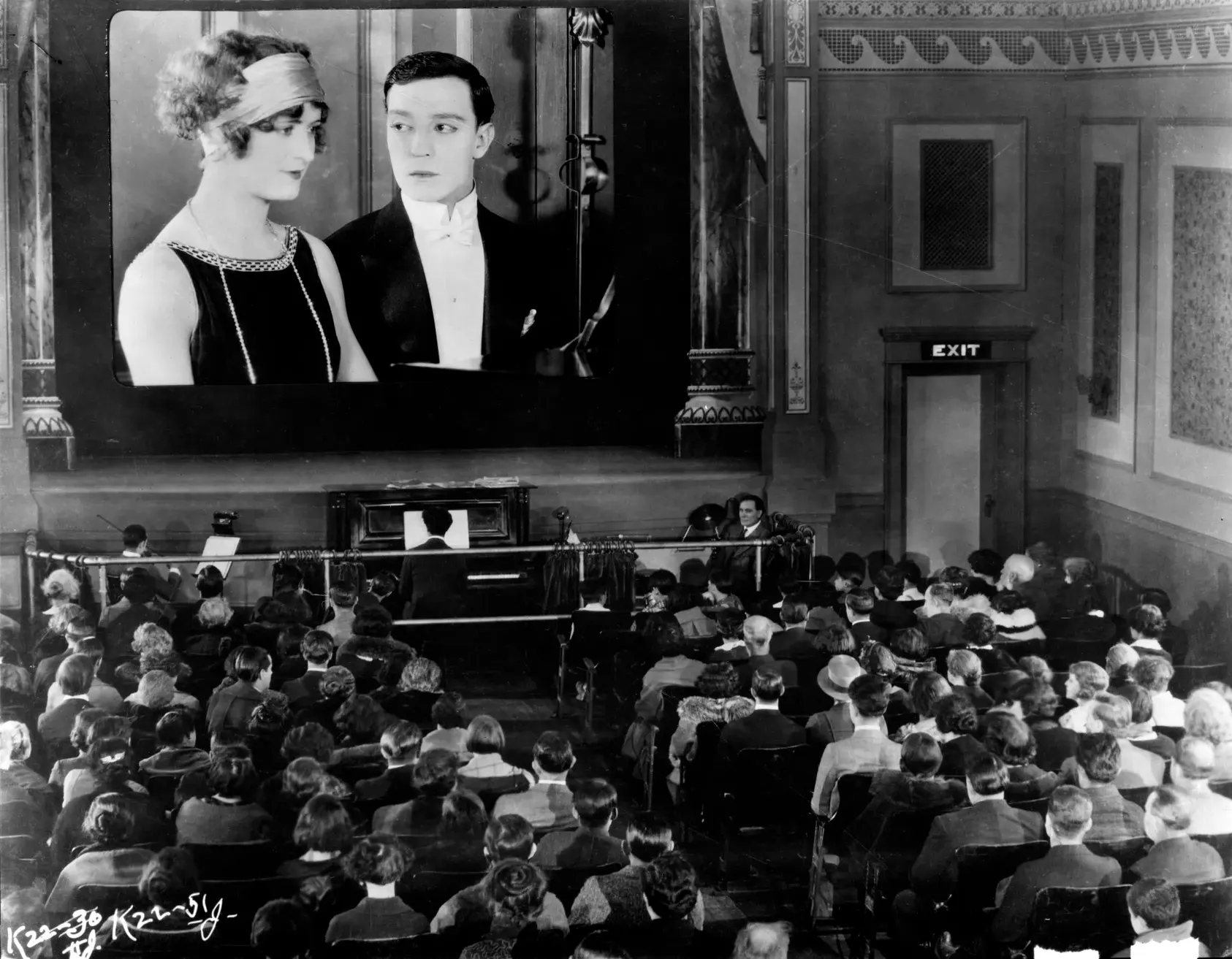
The rules were already firm enough by 1924 for Buster Keaton to build a joke on them. In Sherlock Jr. a projectionist falls asleep, dreams himself into the film he is showing, and walks down the aisle and into the screen. Then the film-within-the-film cuts: the location changes around him, from a garden to a busy street to a cliff to a jungle, while he stays in place. Keaton's body position and the camera's angle match perfectly across every cut, so what should be impossible looks seamless.
The gag works only because the audience of 1924 had already learned that matched positions and matched eyelines mean continuous space. Keaton is exploiting the very grammar this tutorial describes: he keeps the "continuity" cues (his position, the framing, the direction of his look) rock-steady, and changes everything else. It is one of the earliest films to treat the rules of editing as material for comedy, and it still teaches them more vividly than any diagram.
When to cross the line on purpose
A crossing that the audience feels as a jolt is a tool, and directors use it when they want the ground to shift under a character.
- Disorientation. A character wakes in a strange place, or a conversation turns into an interrogation. Reversing the axis mid-scene tells the audience, below the level of language, that the situation has flipped.
- A relationship that has turned. Two people who have always been shot on one axis are suddenly shot from the far side when one betrays the other. The seats have changed; so have the roles.
- Deliberate chaos. Fight and battle scenes in some contemporary action cinema abandon screen direction entirely, so that the audience cannot orient itself any better than the participants. Done well, it is a choice; done carelessly, it is just confusion.
The test is always whether the disorientation is felt as meaning or as error, and that depends on whether the film has established its rules firmly enough beforehand to make the break register.
An exercise
Take any dialogue scene you like and draw it from above. Mark the two actors, draw the line between them, and then mark where the camera is in every shot. You will almost certainly find every setup in one half-circle. Then find a scene in the same film that made you feel uneasy without knowing why, and draw that one. The odds are good that somewhere in it the camera has crossed, and that the director wanted you uneasy.
Once you can see the line, you cannot stop seeing it. That is the point. Coverage that seemed like a neutral recording of a conversation turns out to have a geometry, and the geometry was a set of decisions, made in advance, about what the audience should be sure of and what it should not.